
Crawl Space Encapsulation Cost in Cypress, CA
Transparent Crawl Space Encapsulation Cost Pricing for Cypress, CA Homeowners — Free Estimates

Crawl space encapsulation is the process of sealing your home’s crawl space with heavy-duty vapor barriers, rigid insulation, and moisture-control systems to protect the structural integrity of your property and the air quality inside your home. In Cypress, CA — a city situated in the low-lying coastal plain of Orange County — high seasonal humidity, clay-heavy soils, and aging post-war housing stock make crawl space encapsulation not just a luxury but a practical necessity for many homeowners.
At Green Planet Insulation, we specialize in comprehensive crawl space encapsulation services tailored to the specific climate and construction conditions found throughout Cypress and the surrounding communities. Whether you’re dealing with moisture intrusion from the local water table or mold growth from Pacific marine air, our team has the expertise and materials to deliver lasting protection. Call us today at (714) 475-7021 to schedule your assessment.
Understanding Crawl Space Encapsulation
Crawl space encapsulation is a multi-layer moisture management strategy designed to create a controlled environment beneath your home. Unlike simple vapor barriers of the past — thin 6-mil polyethylene sheets that were standard practice through the 1980s — modern encapsulation systems use reinforced 12-mil to 20-mil liners that cover the floor, walls, and piers of the crawl space entirely, effectively turning an open dirt crawl space into a semi-conditioned zone.
The practice evolved significantly after building science research in the early 2000s demonstrated that open crawl spaces with passive vents — once considered the industry standard — actually introduced more moisture into homes in humid coastal climates than they removed. The Building Science Corporation’s landmark 2001 study on vented versus sealed crawl spaces changed how contractors across the country approached subfloor moisture management, and California builders and inspectors gradually updated code expectations accordingly.
Read moreShow less
In Cypress, a significant portion of the residential housing stock was built between 1950 and 1980, during the city’s rapid post-war development following its incorporation in 1956. Many of these homes feature raised foundations with crawl spaces that were constructed to older venting standards. These older systems are now showing their age: deteriorating kraft-faced fiberglass batts, failing vapor barriers, and poorly ventilated subfloor cavities are common findings during our inspections throughout the city.
A complete encapsulation system typically includes:
- Removal of existing debris, old insulation, and failing vapor barriers
- Installation of a reinforced polyethylene or reinforced foil liner across the ground and up the foundation walls
- Sealing of all vents, penetrations, and joints with foam and tape
- Installation of a dehumidifier or conditioning system to manage residual moisture
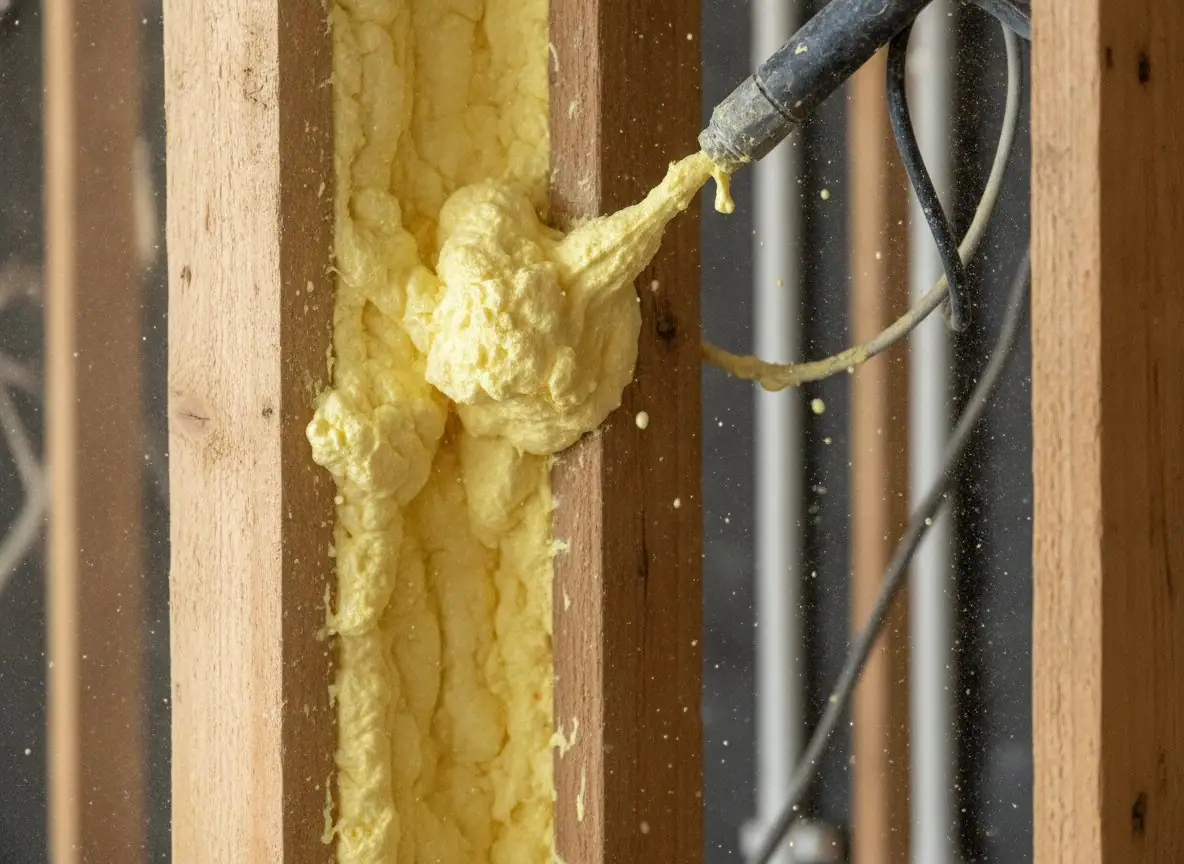
- Optional rigid foam board or spray foam insulation added to foundation walls
Understanding these components helps Cypress homeowners make informed decisions about what level of protection their specific property needs. Learn more about our crawl space insulation services to see how encapsulation pairs with proper subfloor insulation.
Why Crawl Space Encapsulation Is Needed in Cypress, CA
Cypress sits within the Los Cerritos lowland, a broad alluvial plain formed over thousands of years by sediment deposits from the San Gabriel and Los Angeles Rivers. The native soil beneath much of Cypress is a heavy Hesperia-Hanford clay loam series — a dense, poorly draining soil type that retains water long after rainfalls and keeps the local groundwater table elevated compared to inland communities. In wet years, portions of central and south Cypress see groundwater levels rise to within 4 to 6 feet of the surface, meaning moisture is constantly working upward through capillary action into crawl spaces with inadequate vapor barriers.
The regional marine climate compounds this problem significantly. Cypress experiences an average relative humidity of 75 to 85 percent during the June Gloom season — typically May through July — when cool, moist air from the Pacific Ocean blankets coastal Orange County. This marine layer keeps daytime temperatures suppressed and nighttime humidity levels extremely high, creating ideal conditions for mold, mildew, and wood rot to develop in unprotected crawl spaces. Annual rainfall in Cypress averages approximately 13 inches, but atmospheric moisture from coastal air is present year-round.
Read moreShow less
Specific weather events have highlighted local vulnerability. The atmospheric river storms of January and February 2023 brought historic rainfall to Orange County, with Cypress recording over 4 inches in a 48-hour period — far exceeding the city’s drainage infrastructure capacity in older neighborhoods. Following that event, our inspection volume in neighborhoods like the Cypress Gardens and Colony Park areas increased dramatically as homeowners discovered standing water, damaged vapor barriers, and active mold colonies beneath their homes.
Neighborhoods closer to the Coyote Creek corridor — including residential streets near Cerritos Avenue and Bloomfield Street — sit in historically designated flood zone areas per FEMA’s updated 2021 Flood Insurance Rate Maps (FIRMs) for Orange County. Homes in these zones face elevated groundwater pressure during any significant rain event, and their crawl spaces are especially susceptible to moisture infiltration through foundation cracks and unsealed vents.
Beyond moisture, Cypress’s warm summer temperatures — averaging highs of 83°F in August — combined with crawl space humidity create conditions where wood-destroying organisms including subterranean termites thrive. The Western Subterranean Termite (Reticulitermes hesperus), which is endemic throughout coastal Southern California, uses moisture-softened wood as a primary entry and feeding point. A properly encapsulated crawl space removes the moisture conditions these pests need, providing an additional layer of structural protection alongside pest control.
Finally, indoor air quality is a major concern for Cypress families. Research by the EPA estimates that 40 to 50 percent of the air in a home’s living areas originates from the crawl space through the “stack effect” — the natural upward movement of air through a structure. When that crawl space air contains mold spores, VOCs from soil gases, or elevated particulates from deteriorating old insulation, it directly impacts the health of everyone living above.
Free, no-obligation estimates
Talk to Green Planet Insulation
Tell us what you need and we’ll take it from there.
Signs You Need Crawl Space Encapsulation in Cypress
Moisture and Structural Indicators
- Musty or earthy odors rising through floor vents or hardwood floors
- Visible condensation on floor joists, pipes, or HVAC ductwork beneath the home
- Sagging, soft, or bouncy areas in flooring — a sign of moisture-compromised subfloor sheathing
- White efflorescence (mineral deposits) on foundation walls indicating water migration
- Rust staining on metal fasteners, pipes, or HVAC components in the crawl space
Air Quality and Health Indicators
- Increased allergy or asthma symptoms that worsen at home but improve when away
- Visible black, green, or white mold growth on wood framing members
- Persistent respiratory irritation or unexplained headaches in household members
Energy and Comfort Indicators
- Notably cold floors in winter despite adequate heating — indicating heat loss through uninsulated crawl space
- Unusually high energy bills without a clear explanation
- Uneven temperatures between rooms, particularly on lower floors
Urgency Warning Signs
If you observe standing water in your crawl space, active mold colonies covering more than 10 square feet, or significant pest activity including termite mud tubes on foundation walls, these are urgent conditions requiring immediate professional evaluation. Contact Green Planet Insulation at (714) 475-7021 for priority scheduling.
Our process
Our Crawl Space Encapsulation Process in Cypress
- 01
Comprehensive Inspection and Assessment (1–2 Hours)
Our certified technician conducts a thorough inspection of your crawl space, documenting moisture readings with a calibrated hygrometer, photographing problem areas, measuring the crawl space square footage, and identifying the condition of existing insulation
- 02
Detailed Estimate and System Design (Same Day or Next Business Day)
Based on our findings, we provide a written, itemized estimate with clear pricing for each component. We design a system scaled to your crawl space’s specific dimensions and moisture challenges — a 1,200-square-foot crawl space in an older Cypress Gardens home
- 03
Debris Removal and Old Insulation Extraction (Half to Full Day)
We remove all existing debris, fallen insulation batts, old vapor barriers, and any contaminated materials. Learn about our professional insulation removal services for homes with deteriorated or pest-damaged insulation. All removed materials are properly bagg
- 04
Foundation Preparation and Sealing (Half Day)
All foundation vents are sealed with rigid foam board and spray foam if converting to a closed crawl space system. Cracks in foundation walls, pipe penetrations, and gaps around posts are sealed to prevent moisture intrusion pathways that are particularly comm
- 05
Liner Installation (Half to Full Day)
We install a reinforced 12-mil or 20-mil polyethylene vapor barrier across all ground surfaces and up the foundation walls to a minimum height of 6 inches above grade, with all seams overlapped by at least 12 inches and taped with moisture-resistant seam tape.
- 06
Dehumidifier and Drainage Installation (2–4 Hours)
A properly sized commercial-grade dehumidifier is installed to maintain relative humidity below 55 percent within the sealed space. In crawl spaces near Coyote Creek or other low-elevation areas of Cypress, we may also recommend a sump pump system for managing
- 07
Final Inspection and Walkthrough (1 Hour)
We conduct a final quality check, take post-installation moisture readings, and walk you through operating and maintaining your new encapsulation system. Most Cypress projects are completed within one to two days depending on crawl space size and complexity.
Crawl Space Encapsulation Methods and Approaches
Full Perimeter Encapsulation with Closed-Cell Spray Foam
For Cypress homes in higher-moisture zones near the Coyote Creek flood corridor or those with significant foundation wall cracking, we apply closed-cell spray foam directly to foundation walls at 2 inches of thickness, providing an R-13 insulation value along with a Class II vapor retarder. This approach is particularly effective for older block foundations common in pre-1970 Cypress construction. Explore our spray foam insulation services for more details.
Heavy-Duty Liner System with Conditioned Crawl Space
Our most commonly specified system in Cypress uses a 20-mil reinforced liner combined with a sealed, conditioned crawl space approach — introducing a small supply of conditioned air from the home’s HVAC system into the crawl space to keep it within the home’s thermal envelope. This method works exceptionally well in Cypress’s coastal climate where ambient humidity fluctuates significantly with seasonal marine layer intensity.
Drainage Board and Liner Combination
For crawl spaces in Cypress’s lower-elevation neighborhoods where water pooling has been observed after heavy rains, we install a dimple mat drainage board beneath the liner to channel any water intrusion to a perimeter drain and sump pump system, preventing hydrostatic pressure from compromising the liner.
Hybrid Encapsulation and Insulation Upgrade
When pairing encapsulation with new subfloor insulation — replacing failed kraft-faced fiberglass batts common in 1960s–1980s Cypress homes — we use moisture-resistant rigid foam board or open-cell spray foam between joists in combination with the ground liner system. See our complete crawl space insulation options for hybrid system details.
Crawl Space Encapsulation Cost in Cypress, CA
Understanding the investment required for crawl space encapsulation helps Cypress homeowners plan appropriately. Below are current typical cost ranges our team sees in the local market:
- Basic Vapor Barrier Installation Only: $1,500 – $3,500 for an average 1,000–1,500 sq ft crawl space
- Full Encapsulation with 20-mil Liner: $3,500 – $7,000 depending on square footage and site conditions
- Full Encapsulation with Dehumidifier: $5,000 – $10,000 for comprehensive moisture management
- Full Encapsulation with Spray Foam Walls and Sump Pump: $8,000 – $15,000 for high-moisture Cypress properties near flood-prone zones
Key Cost Factors
- Crawl Space Square Footage: Most contractors price encapsulation at $3 to $8 per square foot of crawl space area
- Access Difficulty: Cypress homes with low clearance crawl spaces (under 24 inches) or limited access hatches require additional labor time
- Existing Conditions: Mold remediation, debris removal, or pest damage repair adds $500 to $3,000 depending on severity
- Drainage Systems: Sump pump installation adds $1,200 to $2,500 to the project total
- Liner Thickness: Upgrading from 12-mil to 20-mil liner adds approximately $0.50 per square foot but significantly extends system lifespan
Read moreShow less
Cypress homeowners should note that properties in Orange County FEMA-designated flood zones may qualify for mitigation assistance through the National Flood Insurance Program. Additionally, energy-efficient encapsulation improvements may qualify for California energy rebates through SoCalGas or SCE. Call (714) 475-7021 for a free, no-obligation estimate.
Neighborhoods We Serve in Cypress
Cypress Gardens
One of Cypress’s oldest established residential tracts, Cypress Gardens features predominantly ranch-style single-family homes built between 1958 and 1972. Many properties in this area have original crawl spaces with 4-mil poly vapor barriers that are now cracked, torn, and ineffective. We regularly perform full encapsulation replacements throughout this neighborhood, particularly on streets adjacent to Holder and Moody Avenues.
Colony Park Area
Located in east-central Cypress near the border with Buena Park, Colony Park’s housing stock dates primarily from the late 1960s and 1970s. Homes here often feature raised foundations with generously sized crawl spaces but poor original insulation — making them ideal candidates for comprehensive encapsulation with insulation upgrades. The area’s proximity to drainage channels increases seasonal moisture exposure.
Western Cypress Near Bloomfield Street
This western residential corridor near Bloomfield Street and Katella Avenue includes homes from multiple construction eras, some built as late as the 1990s. Even newer construction in this zone can experience moisture issues due to the area’s lower topographic elevation and proximity to agricultural drainage infrastructure from Cypress’s pre-residential history. We frequently address elevated humidity readings and early-stage mold growth in this corridor.
Crawl Space Maintenance Tips for Cypress Homeowners
- Inspect Twice Annually: Check your crawl space visually at the start of the rainy season (November) and at the peak of June Gloom (June) — the two highest-moisture periods in Cypress’s climate cycle.
- Monitor Your Dehumidifier: Empty condensate buckets or confirm your drain line is flowing freely at least monthly. Aim to maintain crawl space humidity below 55 percent year-round.
- Check Liner Integrity: Look for tears, lifting edges, or areas where the liner has pulled away from foundation walls, especially after significant rain events like the atmospheric rivers common to Orange County winters.
- Keep Gutters Clear: Clogged gutters direct roof water directly against your foundation. Clean gutters each fall before the first rains to reduce hydrostatic pressure on Cypress’s clay-heavy soils.
- Maintain Positive Grade: Ensure soil around your foundation slopes away from the house at a minimum of 6 inches over 10 feet — coastal soil settling is common in Cypress and can reverse grading over time.
- Inspect Plumbing Penetrations: Pipe seals in the crawl space can degrade. Check that all penetrations remain sealed after any plumbing work or seasonal temperature swings.
- Watch for Pest Activity: Check for termite mud tubes on foundation walls seasonally. Early detection prevents the moisture damage that accelerates termite activity in the crawl space environment.
Why Choose Green Planet Insulation for Crawl Space Encapsulation in Cypress
Green Planet Insulation is a locally focused insulation and encapsulation contractor serving Cypress and the surrounding Orange County communities with deep knowledge of the specific moisture challenges, soil conditions, and building types found in this region. We are not a national franchise applying generic solutions — our team understands the difference between a moisture problem caused by Coyote Creek proximity versus one caused by marine layer condensation, and we design our systems accordingly.
Our full-service capabilities mean you work with one trusted team from initial inspection through installation and follow-up. Beyond crawl space encapsulation, we offer attic insulation, blow-in insulation, spray foam insulation, and complete insulation removal and replacement — allowing us to address your home’s entire thermal and moisture envelope in one coordinated project.
Read moreShow less
We serve homeowners throughout Cypress, Huntington Beach, Anaheim, Buena Park, Fullerton, Garden Grove, Seal Beach, Westminster, and all surrounding communities. Our team is available to answer your questions and schedule your free assessment at (714) 475-7021.
FAQ
Frequently Asked Questions About Crawl Space Encapsulation Cost in Cypress
How much does crawl space encapsulation cost in Cypress, CA?
The cost of crawl space encapsulation in Cypress typically ranges from $3,500 to $15,000 depending on the size of your crawl space, the severity of existing moisture problems, and the specific system components required. A basic 1,200-square-foot crawl space with a 20-mil liner installation runs approximately $4,500 to $6,500 in the current Cypress market. Properties in high-moisture areas near the Coyote Creek corridor or those requiring mold remediation and sump pump systems will fall toward the higher end of this range.
How long does crawl space encapsulation take in Cypress?
Most Cypress crawl space encapsulation projects are completed in one to two days. Smaller crawl spaces under 1,000 square feet with straightforward site conditions are typically finished in a single day. Larger or more complex projects — including homes requiring extensive mold remediation, sump pump installation, or spray foam wall applications — may take two to three days.
Is crawl space encapsulation worth the cost in Cypress’s climate?
Absolutely. Cypress’s combination of clay-heavy soils, a seasonal marine layer that drives humidity to 80–85 percent from May through July, and a housing stock that is predominantly 40 to 70 years old makes encapsulation one of the highest-return moisture management investments a homeowner can make. Properly encapsulated crawl spaces reduce energy bills by 10 to 25 percent, significantly extend the life of floor joists and subfloor sheathing, and dramatically improve indoor air quality.
Does my Cypress home need a dehumidifier with encapsulation?
In most cases, yes. Given Cypress’s coastal humidity levels, simply installing a vapor barrier without active moisture management often results in condensation forming inside the sealed space during the June Gloom season. A properly sized commercial dehumidifier maintains relative humidity below 55 percent and is a recommended component of any complete encapsulation system in coastal Orange County.
Can I encapsulate my crawl space without removing old insulation first?
No. Old, failing fiberglass batt insulation — common in Cypress homes built before 1990 — retains moisture and can harbor mold and pests. Installing an encapsulation liner over compromised insulation traps existing problems rather than solving them. Our process always begins with a thorough inspection and removal of any materials that are wet, moldy, or pest-damaged before installing the new system.
What is the difference between a vapor barrier and full encapsulation?
A vapor barrier is a single layer of polyethylene film placed on the crawl space floor — a partial measure that reduces but does not eliminate moisture intrusion. Full encapsulation seals the floor, walls, and all penetrations with a heavy-duty reinforced liner, seals all vents, and typically includes active moisture management via a dehumidifier. Full encapsulation provides comprehensive, lasting protection that a vapor barrier alone cannot achieve, especially in high-humidity coastal environments like Cypress.
Will encapsulation help with pest problems in my Cypress crawl space?
Yes, significantly. Subterranean termites — the most common wood-destroying organism in coastal Orange County — thrive in moist crawl space environments. By eliminating the moisture conditions that attract and sustain termite colonies, encapsulation is a powerful preventive measure. It also removes the harborage conditions preferred by rodents, which tend to nest in warm, moist spaces with deteriorating insulation. We recommend coordinating encapsulation with a licensed pest control inspection for complete protection.
Do you serve areas near Cypress as well?
Yes. In addition to Cypress, Green Planet Insulation provides crawl space encapsulation services throughout Buena Park, Fullerton, Garden Grove, La Palma, Los Alamitos, Seal Beach, Westminster, Stanton, Anaheim, Huntington Beach, and many other Orange County and Los Angeles County communities. View our full service area to confirm coverage for your location.
Get Your Free Crawl Space Encapsulation Estimate in Cypress Today
Don’t let moisture, mold, or deteriorating conditions beneath your home go unaddressed. The longer crawl space problems persist in Cypress’s coastal climate, the more extensive — and expensive — the damage becomes. Green Planet Insulation provides free, no-obligation crawl space inspections and detailed written estimates for homeowners throughout Cypress and surrounding Orange County communities.
Call us today at (714) 475-7021 to speak directly with a crawl space specialist, or reach out to request your inspection appointment. We respond promptly to all inquiries and offer scheduling flexibility to accommodate your timeline. Protect your home, your family’s health, and your investment — contact Green Planet Insulation now.
Get in touch
Find insulation help near you
Request a free estimate online or give us a call — our team will follow up quickly.
- Call us(714) 475-7021
- Visit6101 Ball Rd, Cypress, CA 90630
- HoursMo-Su 07:00-19:00